Hon'Ble Food Products
Iluppai Poo Samba Rice
Iluppai Poo Samba Rice
Couldn't load pickup availability
Iluppai Poo Samba Rice – The Fragrant Healer
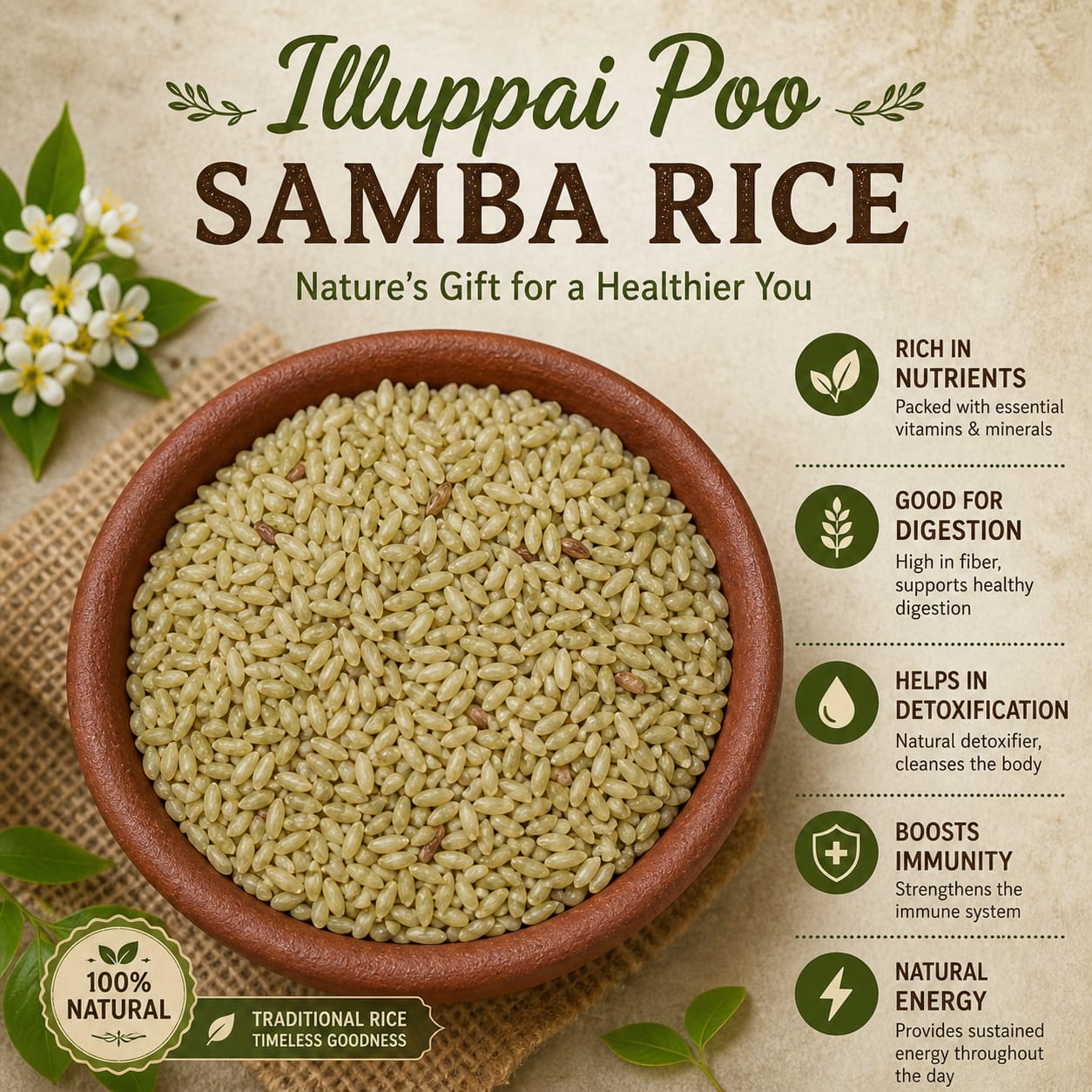
Experience the delicate aroma and profound healing touch of Iluppai Poo Samba Rice. This rare, traditional white rice variety is legendary in Tamil heritage for its unique fragrance—reminiscent of the Iluppai (Mahua) flower—and its powerful role in ancient wellness.
Unlike modern white rice, Iluppai Poo Samba is minimally processed to ensure that its medicinal properties and natural scent remain intact, making every meal a therapeutic experience.
Why Iluppai Poo Samba is Special
-
Joint & Bone Health: Traditionally used in Ayurveda and Siddha medicine to alleviate joint pains, stiffness, and symptoms of arthritis.
-
Immune Support: Known to strengthen the respiratory system and help the body fight off seasonal ailments like coughs and colds.
-
Easy on Digestion: This rice is light on the stomach and is often recommended for children and the elderly due to its easy digestibility.
-
Natural Fragrance: One of the few traditional rice varieties that fills the kitchen with a sweet, floral aroma while cooking—without any artificial additives.
-
Skin & Nerve Tonic: Rich in B-vitamins and minerals that support a healthy nervous system and glowing skin.
Culinary Uses
Iluppai Poo Samba has a soft, fine texture that makes it a favorite for those who prefer lighter grains:
-
Table Rice: An excellent substitute for polished white rice; pairs beautifully with mild curries, moong dal, and vegetable stews.
-
Variety Rice: Its subtle scent makes it a wonderful base for Lemon Rice, Coconut Rice, or Pulao.
-
Healing Porridge: Slow-cook it into a creamy "Kanji" with a little garlic and pepper for a restorative meal during illness.
-
Desserts: Its natural floral notes make it the best choice for creamy rice kheer or payasam.
Cooking Instructions
-
Soaking: Soak for 30 to 60 minutes to enhance the aroma and ensure even cooking.
-
Water Ratio: Use 1 part rice to 2.5 parts water.
-
Method: Can be pressure cooked for 3 whistles or cooked in an open pot. Do not overcook if you prefer the grains to remain separate.
Share